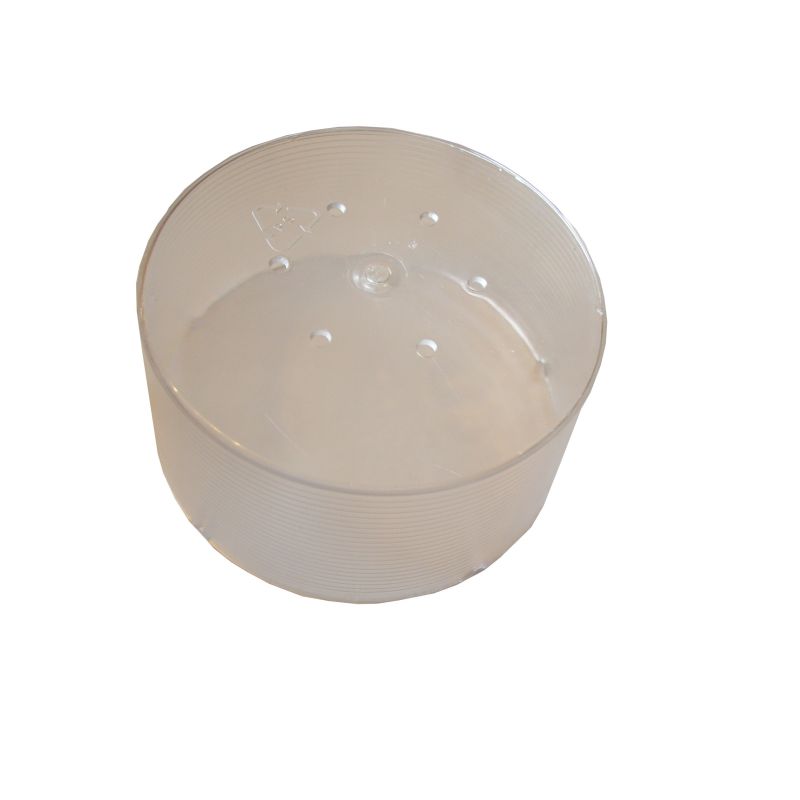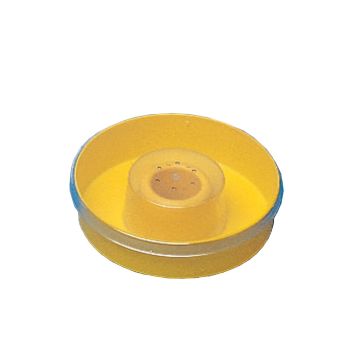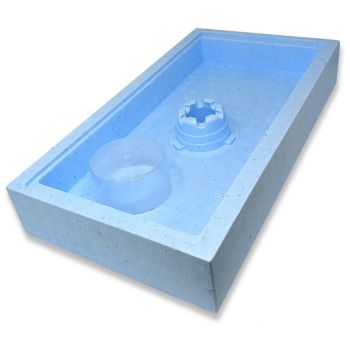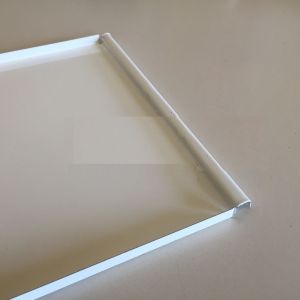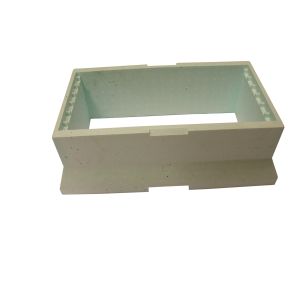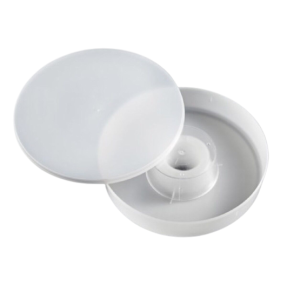
CAMPANA TRANSPARENTE de recambio, con orificios anticondensación para comederos de 1 ó 2 litros Código (QI N01)- (QI N03)- (QI N06)- (QI N07)
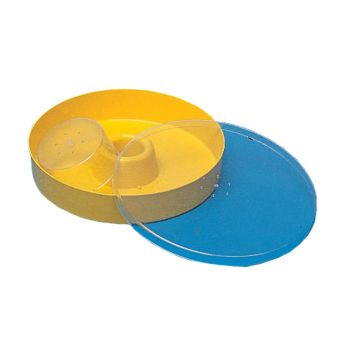
Puede utilizarse tanto para alimentos líquidos como sólidos. Para alimento líquido se utiliza con la campana de plástico transparente artículo QI C97. Para el alimento sólido, se utiliza sin campana, bien colocando directamente la bolsa de pasta de caramelo en lugar de la campana, o bien, si se utiliza caramelo a granel, colocándolo dentro del alimentador, también sin campana. Para cerrar el comedero se utiliza la tapa de poliestireno de la Colmena. La tapa de chapa electrosoldada art. QI T31 cubre el alimentador para evitar filtraciones de agua.
The position of the central hole, into which all the liquid product flows due to the sloping bottom, allows you to also place a 1 L round feeder, or use it as it comes complete with a transparent plastic cover bell (Art. QI C97). For solid food (paste candy), it is used without a bell by directly placing the bag of paste candy (previously cutting on the bag, a disk equal to the diameter of the bell) instead of the bell the bees pass through the side slits feeding without finding obstacles due to the position of the bag, or in the case that, bulk candy is used, it is placed inside the feeder always without a bell.
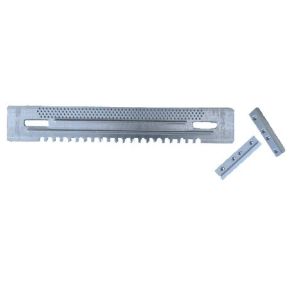
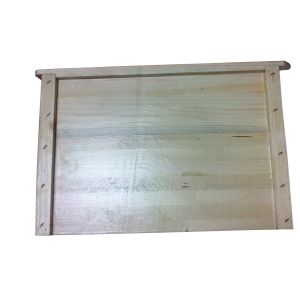
EL ESPACIADOR AHORRA ABEJAS Y MANÍA Según cómo se monte en la colmena, ya sea fresado al ras a la manera clásica, o 6,5 mm más alto método "ahorra espacio para las abejas", permite a las abejas disponer de dos pasos, uno bajo la cabeza del panal, y el segundo, entre el lateral del panal y la pared de la colmena. Los bordes redondeados del espaciador evitan ofender las manos del apicultor.
Puede utilizarse tanto para alimentos líquidos como sólidos. Para alimento líquido se utiliza con la campana de plástico transparente artículo QI C97. Para el alimento sólido, se utiliza sin campana, bien colocando directamente la bolsa de pasta de caramelo en lugar de la campana, o bien, si se utiliza caramelo a granel, colocándolo dentro del alimentador, también sin campana. Para cerrar el comedero se utiliza la tapa de poliestireno de la Colmena. La tapa de chapa electrosoldada art. QI T31 cubre el alimentador para evitar filtraciones de agua.
Using brewer's yeast in PROTEIN NUTRITION will result in more populous Beehives and longer longevity. Store in a dry, cool place out of direct sunlight Composition: Protein min. 40 %, Moisture max. 6 %, Crude Fat 1 %, Crude Cellulose 1 %, Minerals 14 %, Amino Acids 16 %, Vitamins 17 &% METHOD OF SUMMARY : AS SUPPLIED - In spring, after flutter cleaning, yeast is placed in front of Beehives in wide-mouthed pots. Training is done at the entrance. The amount of yeast collected can amount to 200 g/day/family. IN ENERGO-PROTEIC CAKES - 6 kg powdered sugar is mixed with 1 kg yeast. It is homogenized well, and then 2 kg bee honey is added. You mix all the ingredients and correct the consistency by adding honey.It is given in spring, autumn and dry summers in the form of 200 g cakes. IN SYRUP - maximum 10% well homogenized (1 kg yeast + 9 kg syrup). Administration is done after the honey has been harvested and extracted. Only the amount needed for one administration is prepared. If within 2-3 days the mixture is not consumed, the feeding jars are removed and cleaned. THE BENEFITS OF THE USE OF ISTANT INACTIVATED BEER YEAST IN THE FEEDING OF BEES -It enhances the appropriate development of bee families, in a manner to reach maximum development at the beginning of the great harvests from nature. -In the fall it helps in the formation of the fat body. Stimulates bee families to regain headcount and start faster. Stimulates potency. By replacing pollen brewer's yeast from unsafe sources limits the risk of diseases (loca, nosema, the black disease, etc.).
DISCOS FLORALES SULFOSOS - 1 kg Dosificación del envase: Un comprimido de 10 g por cada 6-7 hl de capacidad . De uso exclusivo para la higiene de la bodega. Modo de empleo: introducir el acceso en la barrica por medio de un alambre de hierro que se fijará al tapón. Al extraer el hierro, tenga cuidado de no golpear contra las paredes para evitar que se caiga la parte no quemada. Secar y ventilar los barriles antes de la sulfuración.