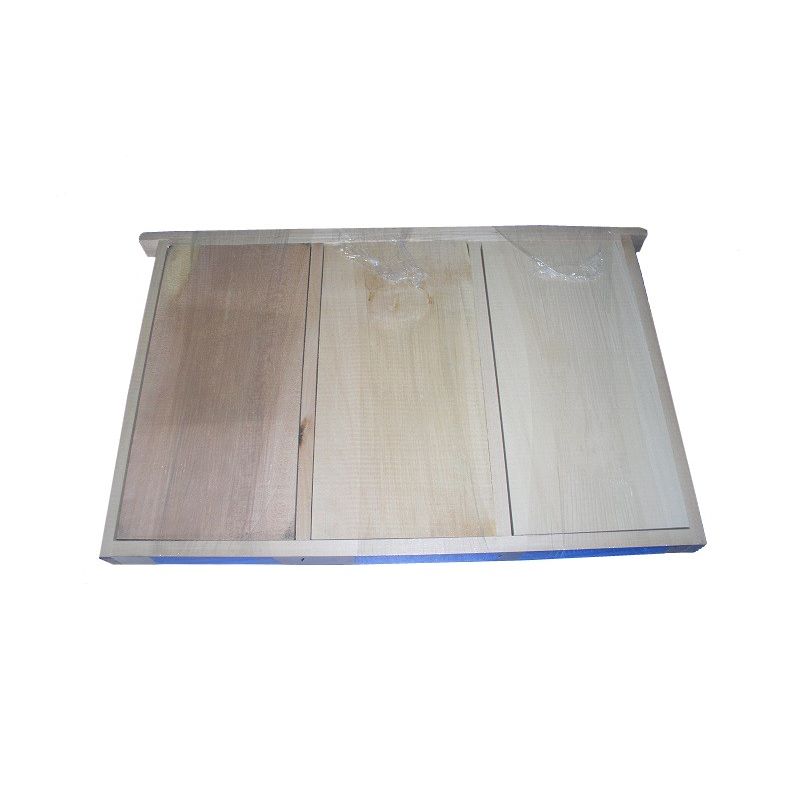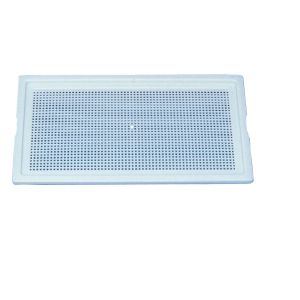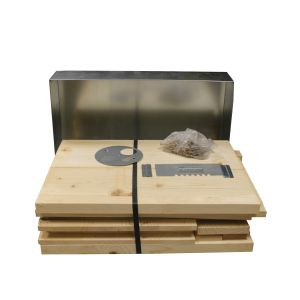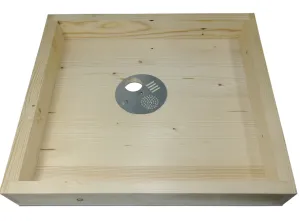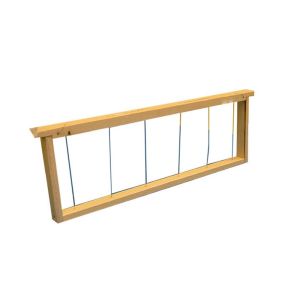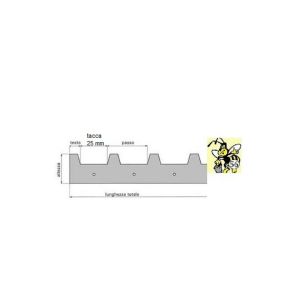
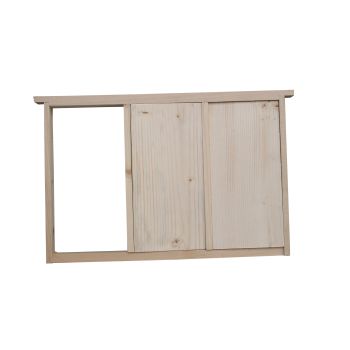
D.B. CAMPERO Marco nido de 3 sectores con 3 maderas para combatir la Varroa sin agentes químicos
Manuka UMF® honey from New Zealand has become one of the most sought-after floral honeys, recognized internationally for its unique antimicrobial properties.Manuka honey is indeed unique in that it contains antimicrobial compounds that are not found in any other floral honey. This uniqueness has led to the development of a testing regimen to certify the concentration of these compounds known as the "unique manuka factor" or UMF®.The company BeeNZ LTD produces UMF-certified New Zealand manuka honey, which is the certification that guarantees the three key elements for the antibacterial action of manuka honey. These elements are:- DHA (didroxyacetone) which is a substance found in the manuka flower; the bee going on this flower transfers this compound into the honey, which through enzymes produced by the bee will be naturally transformed into MGO (methylglyoxal).- the content of MGO expressed in myriagrams per kg (mg/kg) of methylglyoxal, with a minimum of 83 mg/kg up to a maximum of 829 mg/kg. the minimum content of LEPTOSINE which simply translated is the pollen exclusive to the MANUKA flower which must be a minimum of 70% of the total in the jar. This began in the late 1980s when a range of floral honeys began to be tested in laboratories at the University of Waikato in New Zealand and it was discovered that honey derived from Manuka plant species had remarkable antimicrobial properties.It was shown that while all honey contained an enzyme called glucose oxidase that itself has an antimicrobial effect when glucose oxidase releases hydrogen peroxide in the presence of body serum, however, Manuka honey had something extra that when glucose oxidase was removed it still had potent antimicrobial properties.This factor was described as non-peroxide activity, later known as "unique manuka factor" or UMF®.It was not until many years later that the compound responsible for this unique antimicrobial factor was identified as methylglyoxal.While it was known that nectar harvested from the Manuka species produced honey containing methylglyoxal, it was also discovered that there was wide variation in the concentration of methylglyoxal in samples of Manuka honey from different regions, seasons, and density of Manuka plants in a given location. Once methylglyoxal was identified as the main compound contributing to the antimicrobial level of Manuka honey, questions remained about its source since it was not present in the nectar of Manuka flowers.The research continued and it was shown that the methylglyoxal in Manuka honey from New Zealand came from the chemical compound dihydroxyacetone (DHA). When Manuka honey is produced fresh by bees, it contains high levels of dihydroxyacetone and low levels of methylglyoxal, this gradually reverses as naturally occurring proteins and amino acids gradually convert dihydroxyacetone to methylglyoxal.It was therefore necessary to create a measurement and certification system to quantify the antimicrobial efficacy of Manuka honey thus developing the measurement of this honey, known as the "unique manuka factor" or UMF®. The method used is to compare individual honey samples in a colony of bacteria with a known concentration of phenol, a common antiseptic used in the medical industry. By comparing the antimicrobial efficacy of Manuka honey samples with a concentration of phenol, Manuka honey has a classification that guarantees its efficacy. For example, a Manuka honey sample that had the same antimicrobial effect as a 15% phenol concentration is certified as UMF® 15+.Manuka UMF honey in which a higher index of UMF®10 is detected is considered active, but laboratory studies have shown that Manuka honey having non-peroxide activity levels of UMF® 15, UMF® 20 or higher is indeed active on a wide range of bacteria.Several international studies have demonstrated the active action of Manuka UMF® honey in combating bacterial strains. Manuka UMF® honey is an extraordinary product, its unique value stemming from the presence of compounds such as hydrogen peroxide, the high level of methylglyoxal expressed in terms of UMF®, along with antioxidants, polyphenols, phenolic acids, flavonoids and bee substances, all of which are vital to our health.
REFRACTÓMETROS A PETICIÓN Código 01569 Refractómetro para cerveza - 69,00 € Art. RSG32-ATC Refractómetro para cerveza con 2 escalas, con compensación automática de temperatura. Escalas de medida: 0 - 32% Brix 1000 - 112 Cod. 01568 Refractómetro Para vinagre balsámico y alim. - 81,00 € Art. SBR 0080 REF F6 108 Refractómetro con 1 escala 0-80% Brix div. 0,5% Brix Cod. 01566 Refractómetro para baterías y refrigerantes - 79,00 € Art. 4600 REF 402 -50/+20 °C, 1,15-1,30 p.s., baterías y refrigerantes. Generalmente utilizado en el campo mecánico para comprobar la validez de las baterías Art. Nº 01565 Refractómetro REF. 302-0-12 g/dl 1000-10450 p.s.- Proteína - 79,00 € Art. 4500 REF 302 -0-12 g/dl, 1000-1050 p.s., 1,3330-1,3600 IR Proteína Modelo clínico con 3 escalas: 0-12 g/dl = para concentración de proteínas Cod. 01564 Refractómetro REF. 301-0-12 g/dl 1000-1040 p.s.- Proteína - 79,00 € Art. 4450 REF 301 -0-12 g/dl, 1000-1040 p.s. - Proteína Adecuado para medir la concentración de proteínas y el peso específico de la orina Cod. 01563 Refractómetro SALINIDAD REF. 202-0-28% - 79,00 € Art. 4400 REF. 202 -0-28% SALINIDAD Adecuado para medir el contenido en sal del agua de mar y alimentos preparados expresado en cloruro sódico Cod. 01562 Refractómetro SALINIDAD REF. 211-0-100 para MILLE - 79,00 € Art. 4350 REF. 211-0-100 para MILLE SALINIDAD con compensación automática de temperatura. Como el mod. 201 con compensación automática de temperatura. de 10 a 30°C Ref. 01561 REF. 201-0-100 por MILES - 79,00 € Art. 4300 REF. 201 -0-100 por MILES SALINIDAD Adecuado para medir la concentración de sal en agua de mar y alimentos preparados. Escala de medida: 0-100 por mil Art. 01560 Refractómetro REF. 107-0-90% BRIX - 79,00 € Art. 4250 REF 107 -0-90% Brix (3 escalas) Este modelo tiene 3 escalas. Adecuado para todas las sustancias con una gran concentración. Escala de medición: 0-90% Brix Art. 01558 Refractómetro REF. 105-45-82% BRIX - 81,00 € Art. 4150 REF. 105 -45-82% Brix Adecuado para muchos usos. Zumos de frutas, leche condensada, mermeladas, conservas de frutas. Escala de medición: 45-82% Brix Art. 01557 Refractómetro REF. 104-28-62% BRIX - 79,00 € Art. 4100 REF 104 -28-62% Brix Este modelo es ideal para zumos de fruta concentrados y conservas que contengan azúcar. Código 01556 Refractómetro REF. 113-0-32% BRIX-ATC - 69,00 € Art. 4050 REF 113 0-32% Brix-ATC Mismo modelo que el Art. 103 con compensación automática de temperatura. Compensación de temperatura. Código 01555 Refractómetro REF. 103-0-32% BRIX - 69,00 € Art. 4000 REF 103 -0-32% Brix Es el modelo más utilizado debido a la amplitud de la escala. Se utiliza para mostos, bebidas, helados, etc. Escala de medición: 0-32% Brix Art. 01554 Refractómetro REF. 102-0-18% BRIX - 69,00 € Art. 3950 REF. 102 -0-18% Brix Modelo de precisión adecuado para bajas concentraciones. Utilizado para zumos de frutas, refrescos, licores Art. 01553 Refractómetro REF. 111-0-10% BRIX-ATC - 69,00 € Art. 3900 REF. 111 -0-10% Brix con compensación automática de temperatura. Mismo modelo que el Art. 101 con compensación automática de temperatura Código 01552 Refractómetro REF. 101-0-10% BRIX - 69,00 € Art. 3850 REF. 101 -0-10% Brix Modelo de precisión adecuado para bajas concentraciones. Utilizado para zumos de frutas con baja concentración, aceites cortados, verduras, maíz, oliva Cod. 01551 Refractómetro OECSHLE BABO BRIX - 63,00 € Art. 711 Refractómetro con compensación automática de temperatura con 3 escalas 0-140 OECSHLE 0-26 BABO 0-32 BRIX Cod. 01550 Refractómetro VOL/Baumé - 69,00 € Art. 504 Refractómetro VOL/Baumé con 2 escalas Baumé y grado alcohólico aproximado Escala de medida 0-25% vol 0-20% Baumé Precisión 0,2% vol Cod. 01559 Refractómetro Art. 4200 REF. 106 Modelo utilizado para medir los 3 índices de la miel, a saber: contenido de azúcar, beaume' y contenido de agua. Refractómetros ( Modo de empleo ) REFRACTÓMETROS MANUALES El índice de refracción de un líquido que contiene azúcar u otros sólidos solubles es proporcional a su concentración.