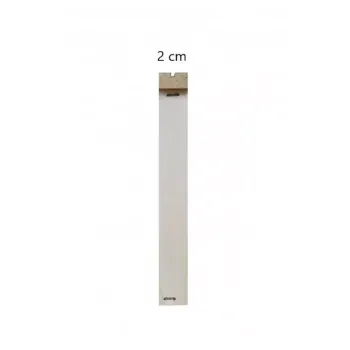










BioLetalVarroa Formic - EVAPORATOR DOSER FORMIC ACID
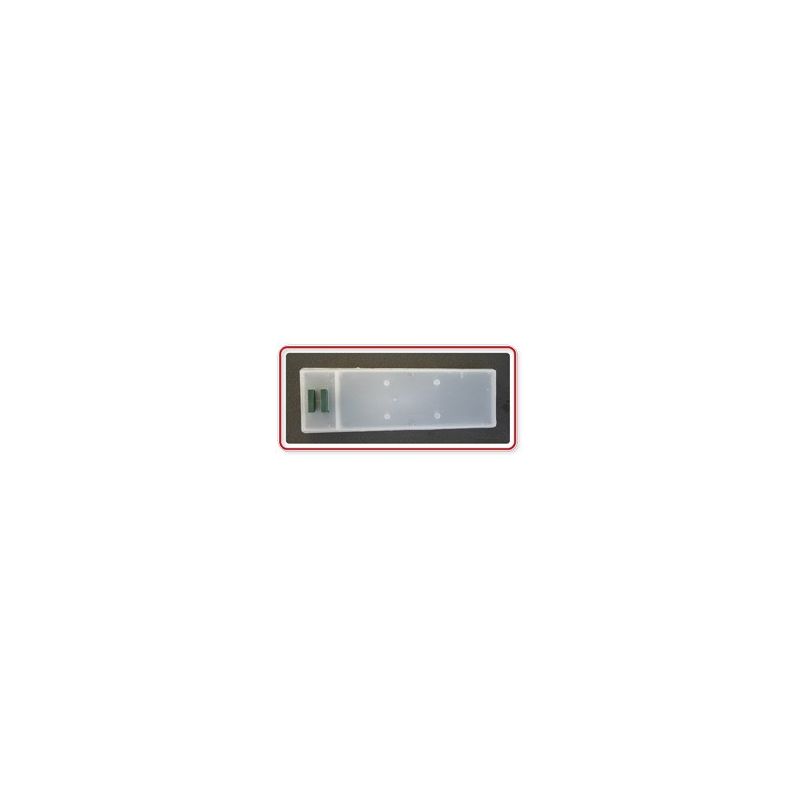
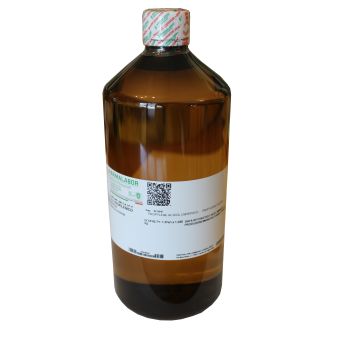
Method of carrying out the treatment 1) Clean the central frames of wax and propolis residues, where the evaporator will be placed.2) Put the Beehive "on bubble". 3) The "BioLetalVarroa formic" evaporator dispenses a minimum amount of formic acid (continuous release), sufficient to gradually break down nascent varroa, and not; therefore, it is recommended to make a treatment with sublimated oxalic acid (BioLetalVarroa sublimator recommended), to break down the maximum amount of varroa out of brood and continue, 3-4 days later, with the treatment by "BioLetalVarroa formic".4) Fill the dispenser with the amount needed for a single 25-day treatment, which is about 360 g of 85% formic acid, through the two holes provided to house the sponges, positioning it vertically and then closing it by means of the two caps provided by package until it is placed in the Beehive.5) If checking for Varroa drop, it is recommended not to clean the Varroa tray with a brush, but to operate it with a dustpan or possibly wear a protective mask, to avoid inhaling any residual oxalic acid.6) Place the dispenser on top of the frames in the center of the family, removing the end caps and inserting the two sponges into the holes provided, lodging them vertically until they touch the bottom.7) Close the Beehive with the upside-down cover if fitted with a 55mm frame. Otherwise, add a frame of the same size and close the Beehive normally8) To operate in excellent condition, it is necessary to protect the Beehive with insulation (polystyrene s20-25mm recommended) to prevent sun-induced overheating, thus allowing the evaporator to operate exclusively with the natural temperature of the bee family. 9) For the treatment of the cores, the execution of the treatment is equivalent to that of the Beehives. However, it is recommended to close one of the two holes with the cap, thus inserting only an evaporation sponge in the second hole.10) If climatic conditions induce excessive overheating, which cannot be reduced with the insulator, it is recommended to shorten the height of the sponges, checking that the daily evaporation does not exceed 14-18 g.11) When the treatment is finished, the container can be emptied of the residual acid, which can be reused for other treatments.
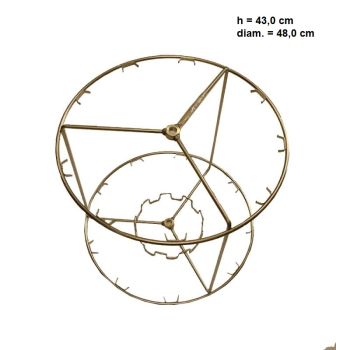
No. 3 additional cages not included are required for nest combs (INOX QI G06 series)
Honey super assembled size: 50cm x 50cm
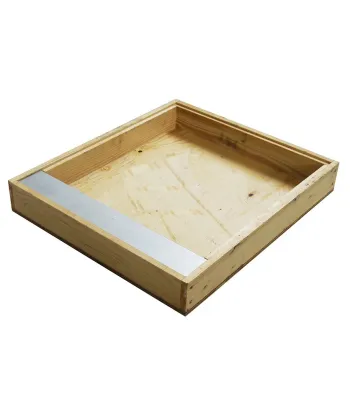
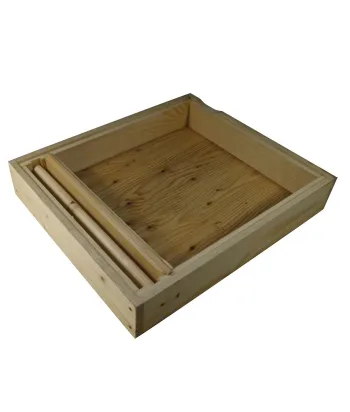
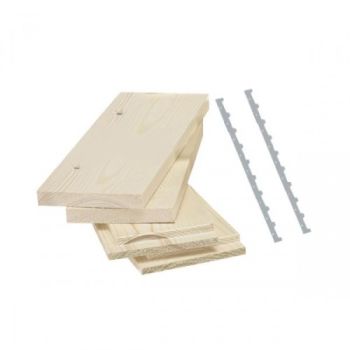
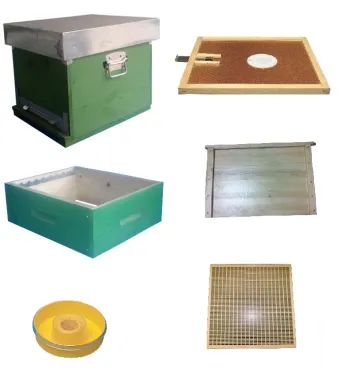
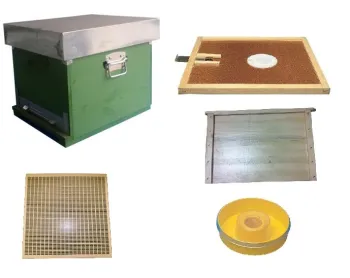
- Accessories11) Honey super D.B. 6 honeycomb (Cod. QI M60)12) Front spacer (Cod. QI D32)13) Side reinforcement (Cod. QI R128)14) Polystyrene lid with mesh (Cod. QI C16)15) Wood and mesh lid (Cod. PI 38/A)16) Perforated sheet metal cover (Cod. FO 1045)17) Perforated plastic cover (Cod. ES RT)18) Sheet metal roof (Cod. FO 1042)- Porches 21) Galvanized porch center position (Cod. QI P25)22) Galvanized protection porch with slider (Cod. QI P35)23) Replacement slider protection porch (Cod. QI P36)- Feeders31) Nutrient cover 1 hole (Cod. QI N06)32) Cable cover feeder 1 hole new (Cod. QI N07)33) Double compartment cable cover feeder (Cod. QI N12)34) Replacement bell (Cod. QI C97)35) Replacement volcano (Cod. QI C107)
BioLetalVarroa Formic - EVAPORATOR DOSER FORMIC ACID