












Special Products
Featured Products

Formic acid dispensers
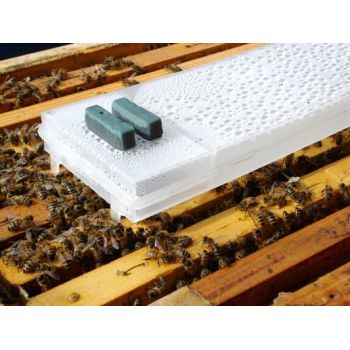
Method of carrying out the treatment 1) Clean the central frames of wax and propolis residues, where the evaporator will be placed.2) Put the Beehive "on bubble". 3) The "BioLetalVarroa formic" evaporator dispenses a minimum amount of formic acid (continuous release), sufficient to gradually break down nascent varroa, and not; therefore, it is recommended to make a treatment with sublimated oxalic acid (BioLetalVarroa sublimator recommended), to break down the maximum amount of varroa out of brood and continue, 3-4 days later, with the treatment by "BioLetalVarroa formic".4) Fill the dispenser with the amount needed for a single 25-day treatment, which is about 360 g of 85% formic acid, through the two holes provided to house the sponges, positioning it vertically and then closing it by means of the two caps provided by package until it is placed in the Beehive.5) If checking for Varroa drop, it is recommended not to clean the Varroa tray with a brush, but to operate it with a dustpan or possibly wear a protective mask, to avoid inhaling any residual oxalic acid.6) Place the dispenser on top of the frames in the center of the family, removing the end caps and inserting the two sponges into the holes provided, lodging them vertically until they touch the bottom.7) Close the Beehive with the upside-down cover if fitted with a 55mm frame. Otherwise, add a frame of the same size and close the Beehive normally8) To operate in excellent condition, it is necessary to protect the Beehive with insulation (polystyrene s20-25mm recommended) to prevent sun-induced overheating, thus allowing the evaporator to operate exclusively with the natural temperature of the bee family. 9) For the treatment of the cores, the execution of the treatment is equivalent to that of the Beehives. However, it is recommended to close one of the two holes with the cap, thus inserting only an evaporation sponge in the second hole.10) If climatic conditions induce excessive overheating, which cannot be reduced with the insulator, it is recommended to shorten the height of the sponges, checking that the daily evaporation does not exceed 14-18 g.11) When the treatment is finished, the container can be emptied of the residual acid, which can be reused for other treatments.
€11.80Price
Method of carrying out the treatment 1) Clean the central frames of wax and propolis residues, where the evaporator will be placed.2) Put the Beehive "on bubble". 3) The "BioLetalVarroa formic" evaporator dispenses a minimum amount of formic acid (continuous release), sufficient to gradually break down nascent varroa, and not; therefore, it is recommended to make a treatment with sublimated oxalic acid (BioLetalVarroa sublimator recommended), to break down the maximum amount of varroa out of brood and continue, 3-4 days later, with the treatment by "BioLetalVarroa formic".4) Fill the dispenser with the amount needed for a single 25-day treatment, which is about 360 g of 85% formic acid, through the two holes provided to house the sponges, positioning it vertically and then closing it by means of the two caps provided by package until it is placed in the Beehive.5) If checking for Varroa drop, it is recommended not to clean the Varroa tray with a brush, but to operate it with a dustpan or possibly wear a protective mask, to avoid inhaling any residual oxalic acid.6) Place the dispenser on top of the frames in the center of the family, removing the end caps and inserting the two sponges into the holes provided, lodging them vertically until they touch the bottom.7) Close the Beehive with the upside-down cover if fitted with a 55mm frame. Otherwise, add a frame of the same size and close the Beehive normally8) To operate in excellent condition, it is necessary to protect the Beehive with insulation (polystyrene s20-25mm recommended) to prevent sun-induced overheating, thus allowing the evaporator to operate exclusively with the natural temperature of the bee family. 9) For the treatment of the cores, the execution of the treatment is equivalent to that of the Beehives. However, it is recommended to close one of the two holes with the cap, thus inserting only an evaporation sponge in the second hole.10) If climatic conditions induce excessive overheating, which cannot be reduced with the insulator, it is recommended to shorten the height of the sponges, checking that the daily evaporation does not exceed 14-18 g.11) When the treatment is finished, the container can be emptied of the residual acid, which can be reused for other treatments.
€11.80Price
€11.80Price
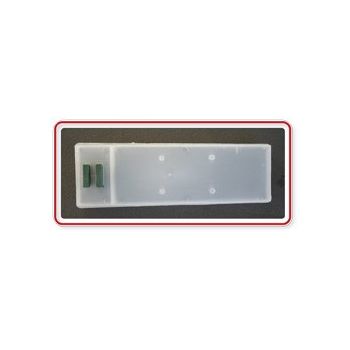
BioLetalVarroa Formic - EVAPORATOR DOSER FORMIC ACID
€11.80Price
BioLetalVarroa Formic - EVAPORATOR DOSER FORMIC ACID
BioLetalVarroa Formic - EVAPORATOR DOSER FORMIC ACID
€11.80Price
USE RECOMMENDATIONS FOR ASPRONOVAR:A) For Beehives- 3 small bottles filled with 200 ml/cad- felt wick 3 cm long- frame placement outside the broods- inverted honeycomb or empty Honey super to act as a lung- treatment times 14/21 days depending on varroa fall- intervention between mid-July and mid-August (need to do post treatment at least 2 brood cycles)B) For nuclei- 3 small bottles filled with 100 ml/cad.- 2 cm long felt wick- positioning frame in contact with polystyrene/wood wall- empty honeycomb to act as a lung- treatment time 14/21 days depending on varroa fall- intervention between mid-July and mid-August (need to do post treatment at least 2 brood cycles) WHY CHOOSE IT: - Gradual spread with possibility to manage evaporation- Low mortality of queen bees- Stability in ant temperature- High efficacy rate- Safe for operator
€12.50Price
USE RECOMMENDATIONS FOR ASPRONOVAR:A) For Beehives- 3 small bottles filled with 200 ml/cad- felt wick 3 cm long- frame placement outside the broods- inverted honeycomb or empty Honey super to act as a lung- treatment times 14/21 days depending on varroa fall- intervention between mid-July and mid-August (need to do post treatment at least 2 brood cycles)B) For nuclei- 3 small bottles filled with 100 ml/cad.- 2 cm long felt wick- positioning frame in contact with polystyrene/wood wall- empty honeycomb to act as a lung- treatment time 14/21 days depending on varroa fall- intervention between mid-July and mid-August (need to do post treatment at least 2 brood cycles) WHY CHOOSE IT: - Gradual spread with possibility to manage evaporation- Low mortality of queen bees- Stability in ant temperature- High efficacy rate- Safe for operator
€12.50Price
€12.50Price
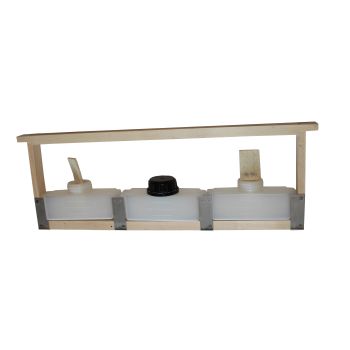
40 "ASPRO NOVAR FORM" FILM DIFFUSER for FORMIC ACID MOUNTED Honey super frame with inserted no. 3 plastic dispensers with closure and no.3 felt webbing (No. PI 796) for dosing evaporation WE RECOMMEND the use of formic acid in 60% liquid solutionREPLACES:- Felt webbing (No. PI 796)- Under cap (No. PI 798)- Seal cap (No. PI 799)- Replacement wooden stand (No. PI795S)
€12.50Price
40 "ASPRO NOVAR FORM" FILM DIFFUSER for FORMIC ACID MOUNTED Honey super frame with inserted no. 3 plastic dispensers with closure and no.3 felt webbing (No. PI 796) for dosing evaporation WE RECOMMEND the use of formic acid in 60% liquid solutionREPLACES:- Felt webbing (No. PI 796)- Under cap (No. PI 798)- Seal cap (No. PI 799)- Replacement wooden stand (No. PI795S)
40 "ASPRO NOVAR FORM" FILM DIFFUSER for FORMIC ACID MOUNTED Honey super frame with inserted no. 3 plastic dispensers with closure and no.3 felt webbing (No. PI 796) for dosing evaporation WE RECOMMEND the use of formic acid in 60% liquid solutionREPLACES:- Felt webbing (No. PI 796)- Under cap (No. PI 798)- Seal cap (No. PI 799)- Replacement wooden stand (No. PI795S)
€12.50Price
USE RECOMMENDATIONS FOR ASPRONOVAR:A) For Beehives- 3 small bottles filled with 200 ml/cad- felt wick 3 cm long- frame placement outside the broods- inverted honeycomb or empty Honey super to act as a lung- treatment times 14/21 days depending on varroa fall- intervention between mid-July and mid-August (need to do post treatment at least 2 brood cycles)B) For nuclei- 3 small bottles filled with 100 ml/cad.- 2 cm long felt wick- positioning frame in contact with polystyrene/wood wall- empty honeycomb to act as a lung- treatment time 14/21 days depending on varroa fall- intervention between mid-July and mid-August (need to do post treatment at least 2 brood cycles) WHY CHOOSE IT: - Gradual spread with possibility to manage evaporation- Low mortality of queen bees- Stability in ant temperature- High efficacy rate- Safe for operator
€8.80Price
USE RECOMMENDATIONS FOR ASPRONOVAR:A) For Beehives- 3 small bottles filled with 200 ml/cad- felt wick 3 cm long- frame placement outside the broods- inverted honeycomb or empty Honey super to act as a lung- treatment times 14/21 days depending on varroa fall- intervention between mid-July and mid-August (need to do post treatment at least 2 brood cycles)B) For nuclei- 3 small bottles filled with 100 ml/cad.- 2 cm long felt wick- positioning frame in contact with polystyrene/wood wall- empty honeycomb to act as a lung- treatment time 14/21 days depending on varroa fall- intervention between mid-July and mid-August (need to do post treatment at least 2 brood cycles) WHY CHOOSE IT: - Gradual spread with possibility to manage evaporation- Low mortality of queen bees- Stability in ant temperature- High efficacy rate- Safe for operator
€8.80Price
€8.80Price
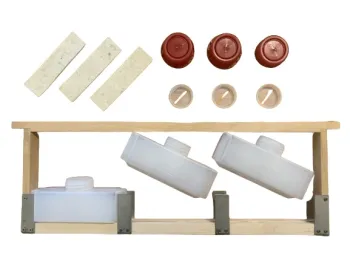
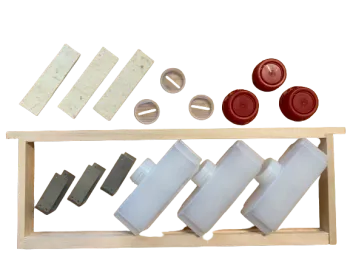
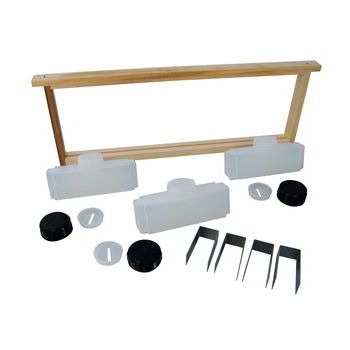
ASSEMBLY KIT (excluding screws) "ASPRO NOVAR FORM" FRAME DIFFUSER for FORMIC ACID CONTAINS:- No. 1 frame- No. 3 bottles- No. 4 stainless steel rails- No. 3 wicks- No. 3 under caps- No. 3 black caps - Screws are excluded. WE RECOMMEND the use of formic acid in 60% liquid solutionREPLACES:- Felt webbing (PI No. PI 796)- Under stopper (PI No. PI 798)- Sealing cap (PI No. PI 799)- Replacement wooden stand (PI No. PI795S)
€8.80Price
ASSEMBLY KIT (excluding screws) "ASPRO NOVAR FORM" FRAME DIFFUSER for FORMIC ACID CONTAINS:- No. 1 frame- No. 3 bottles- No. 4 stainless steel rails- No. 3 wicks- No. 3 under caps- No. 3 black caps - Screws are excluded. WE RECOMMEND the use of formic acid in 60% liquid solutionREPLACES:- Felt webbing (PI No. PI 796)- Under stopper (PI No. PI 798)- Sealing cap (PI No. PI 799)- Replacement wooden stand (PI No. PI795S)
ASSEMBLY KIT (excluding screws) "ASPRO NOVAR FORM" FRAME DIFFUSER for FORMIC ACID CONTAINS:- No. 1 frame- No. 3 bottles- No. 4 stainless steel rails- No. 3 wicks- No. 3 under caps- No. 3 black caps - Screws are excluded. WE RECOMMEND the use of formic acid in 60% liquid solutionREPLACES:- Felt webbing (PI No. PI 796)- Under stopper (PI No. PI 798)- Sealing cap (PI No. PI 799)- Replacement wooden stand (PI No. PI795S)
€8.80Price
€8.50Price
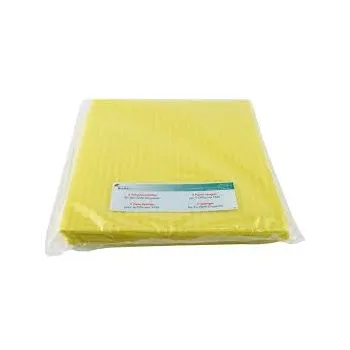
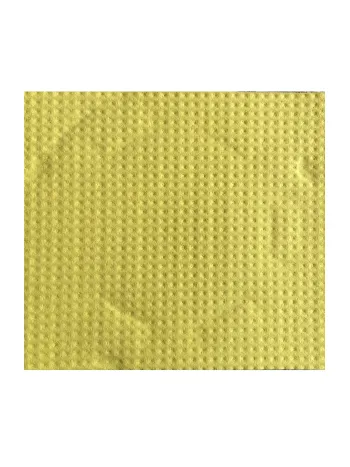
Replacement sponges for use in combination with formic acid medication and FAM Dispenser. The FAM sponge cloth is made of cellulosic material, which can optimally absorb liquid. Package 5 pieces
€8.50Price
Replacement sponges for use in combination with formic acid medication and FAM Dispenser. The FAM sponge cloth is made of cellulosic material, which can optimally absorb liquid. Package 5 pieces
Replacement sponges for use in combination with formic acid medication and FAM Dispenser. The FAM sponge cloth is made of cellulosic material, which can optimally absorb liquid. Package 5 pieces
€8.50Price
€1.00Price
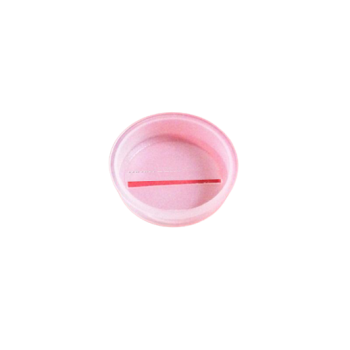
Aspro-Novar-Form replacement underlay - Pack of 3 pieces
€1.00Price
Aspro-Novar-Form replacement underlay - Pack of 3 pieces
Aspro-Novar-Form replacement underlay - Pack of 3 pieces
€1.00Price
€1.20Price
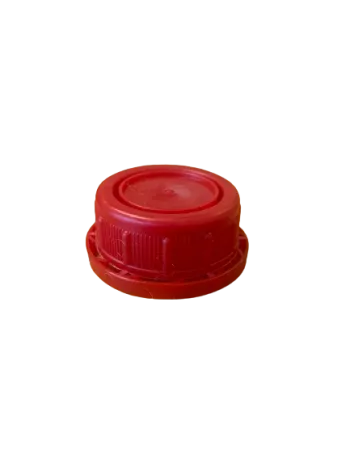
REPLACEMENT SEALING CAP for Aspro-Novar-Form Canvas Pack of 3
€1.20Price
REPLACEMENT SEALING CAP for Aspro-Novar-Form Canvas Pack of 3
REPLACEMENT SEALING CAP for Aspro-Novar-Form Canvas Pack of 3
€1.20Price
€9.50Price
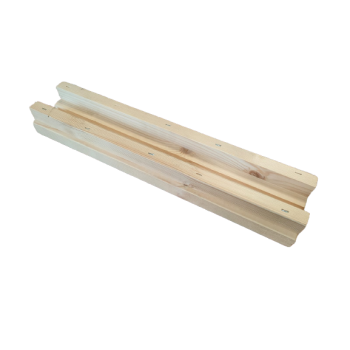
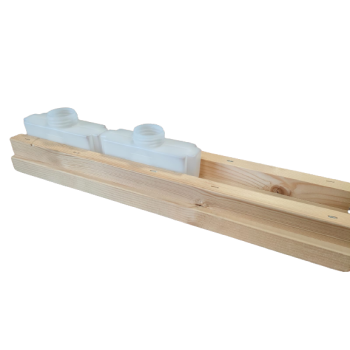
Wooden stand for formic acid bottles. Compatible with the dispensers of the "ASPRO NOVAR FORM" FORMIC ACID DIFFUSER frame. (Stand only - bottles not included)
€9.50Price
Wooden stand for formic acid bottles. Compatible with the dispensers of the "ASPRO NOVAR FORM" FORMIC ACID DIFFUSER frame. (Stand only - bottles not included)
Wooden stand for formic acid bottles. Compatible with the dispensers of the "ASPRO NOVAR FORM" FORMIC ACID DIFFUSER frame. (Stand only - bottles not included)
€9.50Price

€16.80Price
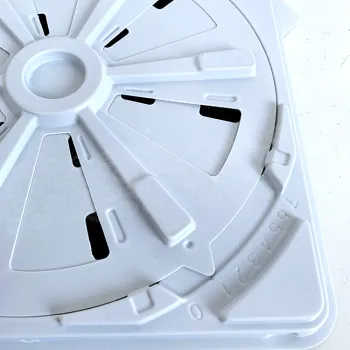
FAM plastic evaporator dispenser for adjustable formic acid (pos.1-7), complete with absorbent sponge Dimensions: 25.5 x 25.5 x H= 1.6 cmSpare sponges (Code MP 814) To be applied over the nest framesRemove the Honey super and leave the bees with sufficient supplies for the duration of the treatment.Prepare the evaporator: remove the lid, add formic acid on the sponge and close the lid. Once in the apiary, open the disc according to temperature and family size. Place the inverted evaporator directly above the brood area. Best results are obtained with a 2-3 cm space between the evaporator and the upper slats of the frames. Adjust the disc opening after 2 days, following the instructions of the drug used. WARNINGS: Read attached instructions.
€16.80Price
FAM plastic evaporator dispenser for adjustable formic acid (pos.1-7), complete with absorbent sponge Dimensions: 25.5 x 25.5 x H= 1.6 cmSpare sponges (Code MP 814) To be applied over the nest framesRemove the Honey super and leave the bees with sufficient supplies for the duration of the treatment.Prepare the evaporator: remove the lid, add formic acid on the sponge and close the lid. Once in the apiary, open the disc according to temperature and family size. Place the inverted evaporator directly above the brood area. Best results are obtained with a 2-3 cm space between the evaporator and the upper slats of the frames. Adjust the disc opening after 2 days, following the instructions of the drug used. WARNINGS: Read attached instructions.
FAM plastic evaporator dispenser for adjustable formic acid (pos.1-7), complete with absorbent sponge Dimensions: 25.5 x 25.5 x H= 1.6 cmSpare sponges (Code MP 814) To be applied over the nest framesRemove the Honey super and leave the bees with sufficient supplies for the duration of the treatment.Prepare the evaporator: remove the lid, add formic acid on the sponge and close the lid. Once in the apiary, open the disc according to temperature and family size. Place the inverted evaporator directly above the brood area. Best results are obtained with a 2-3 cm space between the evaporator and the upper slats of the frames. Adjust the disc opening after 2 days, following the instructions of the drug used. WARNINGS: Read attached instructions.
€16.80Price
€13.00Price
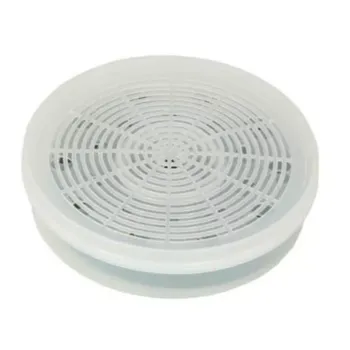
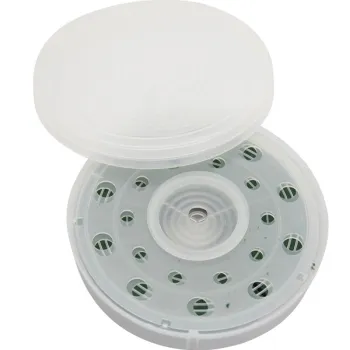
MHT DOSER DISPENCER OF FORMIC AND ACETIC ACID ROTARY PLASTIC with adjustable evaporation areaDim: Diameter 17 cm - Height 4.5 cmThe dispenser is equipped with airtight lid that allows filling before useUse with formic acid from 60% to 85% - Can be reused.Kit consists of: Airtight lid, fixed grid, adjustable grid, container with absorbent sponge
€13.00Price
MHT DOSER DISPENCER OF FORMIC AND ACETIC ACID ROTARY PLASTIC with adjustable evaporation areaDim: Diameter 17 cm - Height 4.5 cmThe dispenser is equipped with airtight lid that allows filling before useUse with formic acid from 60% to 85% - Can be reused.Kit consists of: Airtight lid, fixed grid, adjustable grid, container with absorbent sponge
MHT DOSER DISPENCER OF FORMIC AND ACETIC ACID ROTARY PLASTIC with adjustable evaporation areaDim: Diameter 17 cm - Height 4.5 cmThe dispenser is equipped with airtight lid that allows filling before useUse with formic acid from 60% to 85% - Can be reused.Kit consists of: Airtight lid, fixed grid, adjustable grid, container with absorbent sponge
€13.00Price