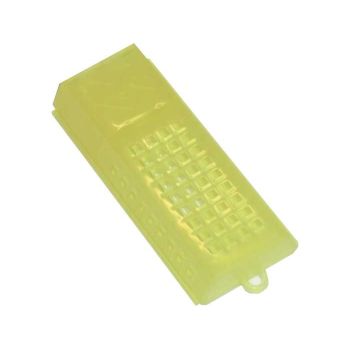









The cage is manufactured from translucent food-grade plastic material. Extra-flat rectangular model. Transparent yellow color. Dimensions: 37 X 13 X 80 mm Weight: 9.5 g. The cage consists of: ? 1 candy reservoir ?1 end cap ?1 round hook for attachment ? 1 set of aeration holes
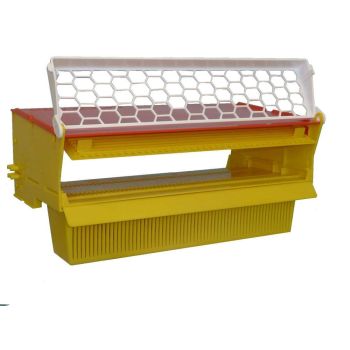
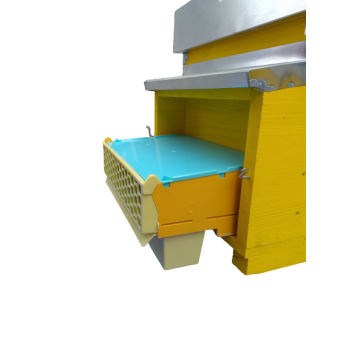
Its unique shape allows it to be placed on all Beehives, Dadant Blatt, with or without a porch, and Langstroth polystyrene Beehives The pollen detachable grid with trapezoidal hole for bee passage has the ability to rotate to be held open or closed. The grids have 3 rows at the bottom, while laterally the bee passage goes up.A rib on both faces of the grid, at the holes and beyond, allows the bees to cling to then pass more easily.If at the placement of the trap on the Beehive, the pollen collection plate is left open, it makes it easier for the bees to recognize a new passage, reducing once it is lowered (closed) any entanglement.A very wide slit, before the pollen collection tray, allows the bees to remove dirt from the Beehive.Two side holes serve as drones passageA very wide roof provides good shelter for the trap from the weather. The tray, has excellent aeration and can hold up to 800 gr. of pollen. The professional pollen trap also comes with an anti Asian wasp net.The anti wasp net, lowered allows the bees to enter and exit with much more peace of mind since, the Asian wasp or velutin wasp cannot attack the beesThe trap is made entirely of 100% recyclable food grade plastic material, assembled without the use of screws, nails or toxic glues.
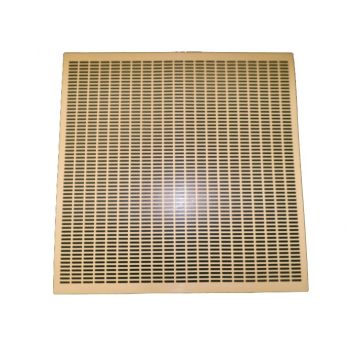
Plastic excluder model "bee care", passage section with smooth finish margin for 10-frame D.B. Beehives - dim 50 x 42.5 cm