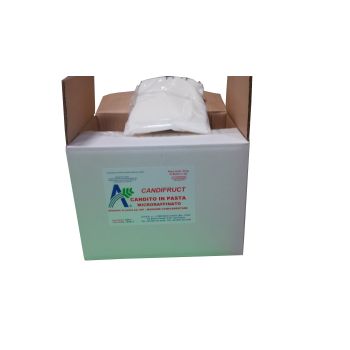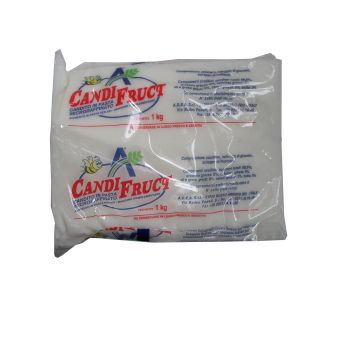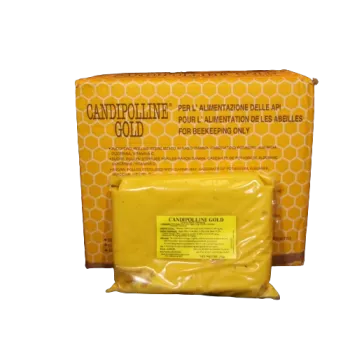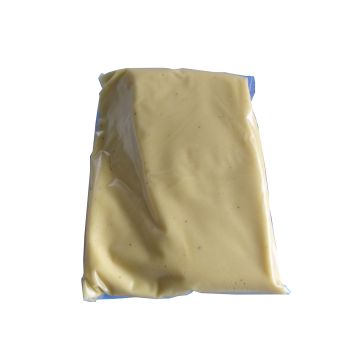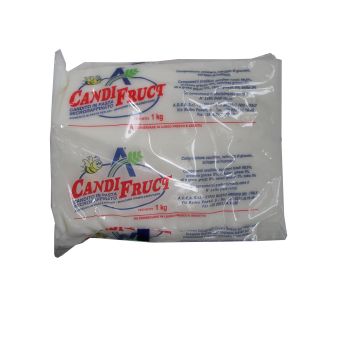







CANDIFRUCT is a paste consisting of sugar (sucrose) with balanced addition of glucose-fructose syrup that is obtained by a gentle steaming process. Due to its very fine crystals and the presence of fructose, it is very palatable and easily assimilated by bees. The presence of fructose gives softness, mellowness and texture to the product, avoiding hardening problems. CANDIFRUCT is the ideal food for the winter maintenance of families, especially in the absence of stocks. It is a very practical product as it can be fed to bees without the need for specific feeders.
Composition: beet sugar Sucrose, sugar syrup, pollen, caseinate, albumin, glycerol Additives: Vitamins: E300 L-Ascorbic Acid (Vit C) 400 IU/kg Analytical characteristics: sugar 93%, crude protein 1.38%, crude cellulose <1.5%, crude oils and fats <0.25%, crude ash <0.5%, calcium 45 mg/kg, phosphorus 108 mg/kg, sodium 57 mg/kg, methionine
Composition: beet sugar Sucrose, sugar syrup, pollen, caseinate, albumin, glycerol Additives: Vitamins: E300 L-Ascorbic Acid (Vit C) 400 IU/kg Analytical characteristics: sugar 93%, crude protein 1.38%, crude cellulose <1.5%, crude oils and fats <0.25%, crude ash <0.5%, calcium 45 mg/kg, phosphorus 108 mg/kg, sodium 57 mg/kg, methionine
CANDIFRUCT is a paste consisting of sugar (sucrose) with balanced addition of glucose-fructose syrup that is obtained by a gentle steaming process. Due to its very fine crystals and the presence of fructose, it is very palatable and easily assimilated by bees. The presence of fructose gives softness, mellowness and texture to the product, avoiding hardening problems. CANDIFRUCT is the ideal food for the winter maintenance of families, especially in the absence of stocks. e. It is a very practical product as it can be fed to bees without the need for specific feeders.
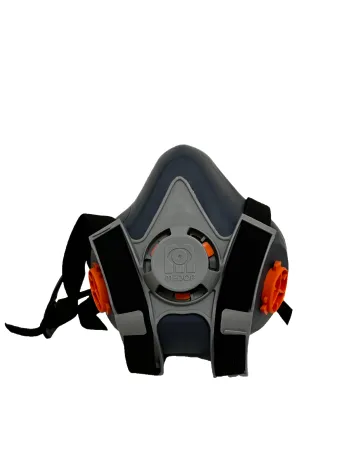
Parabolic DESIGN with 6 panels for less internal condensation. Filters attach by bayonet connection: guided connection, quick and easy to open and close. VERSATILITY: Due to the low profile it allows excellent compatibility with the combined use of safety glasses, as well as with the use of other protective equipment. One size fits all face shapes. COMFORT: Flexible and adjustable for comfort during extended use. Dual headband support system at the head and neck, more comfortable. Can be worn around the neck when not in use. Front adjustment of the headband. Greater breathing comfort due to its two filters and exhalation valve. Quick opening and closing system. ERGONOMICS: Ergonomically designed contact area to ensure an excellent fit to the face, thanks to the chin and side adjustment for optimal fit to any face shape (round, elongated, small and large). Design designed to cover as wide a range of facial physiognomies as possible.
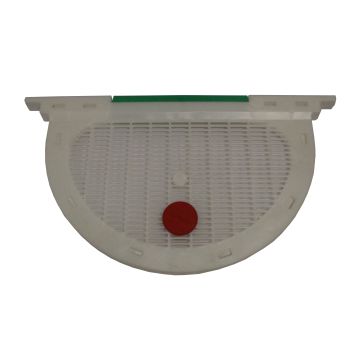
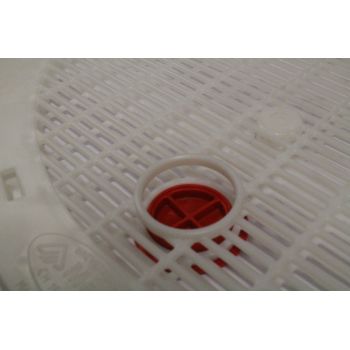
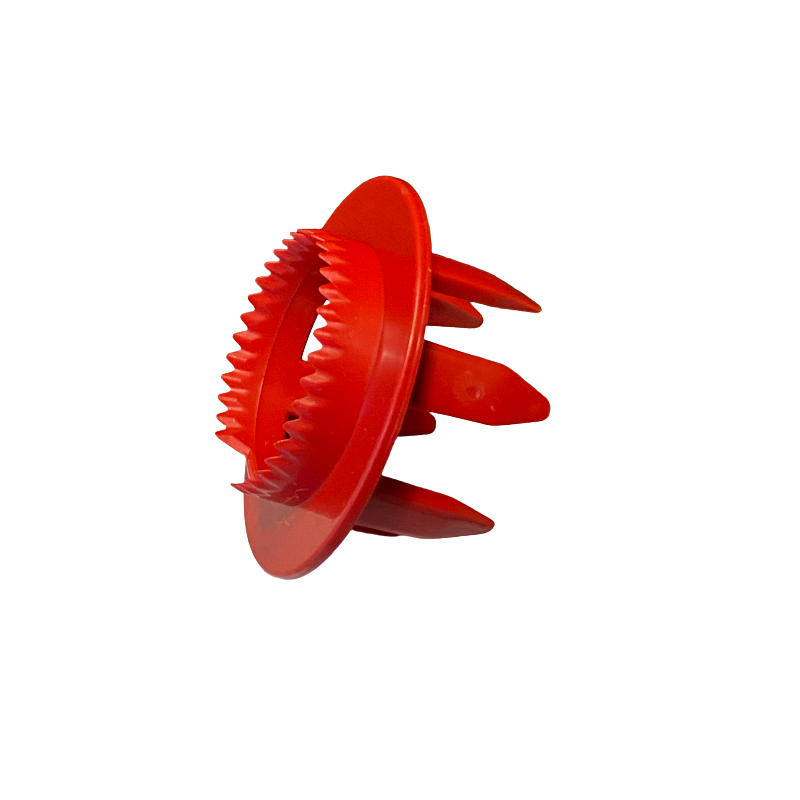
Varroa i fights them more effectively by zeroing out the winter brood. From this observation comes the Menna cage, designed and patented by Vincenzo Menna: a practical device that promotes the queen's rest in the colder months, and that brings all the varroa present in the Beehive more easily out into the open. The period of use varies from northern to southern Italy, but indicatively the first days of November will be the most suitable to start caging, and mid to late January those for caging. Considering that a regular family goes into production in 60 to 70 days from the release of the queen, it will be up to the beekeeper to adjust the period.