
€4,350.00Regular price-€450.00€4,800.00Price






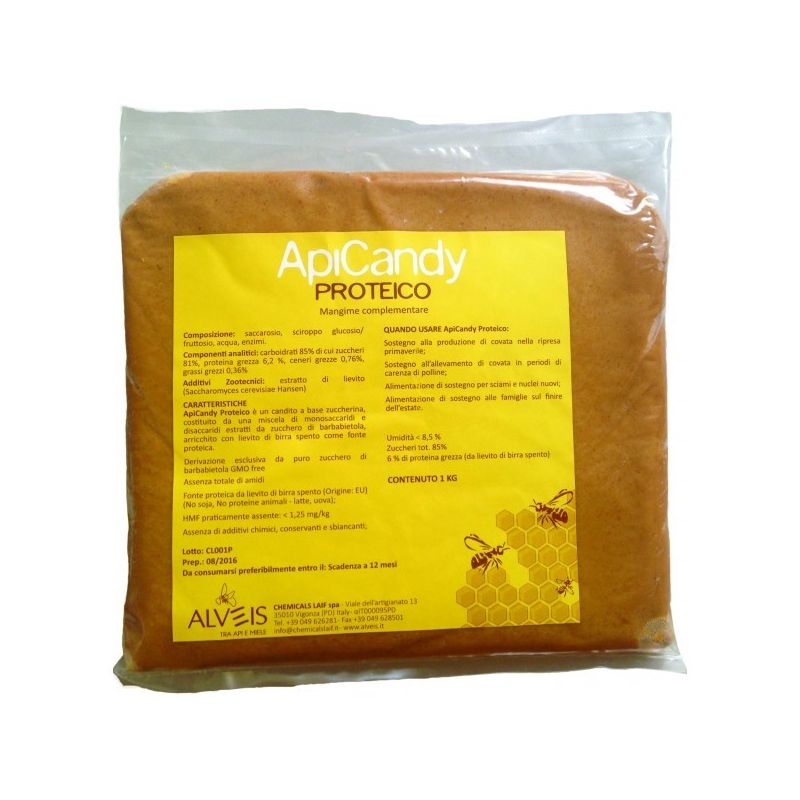

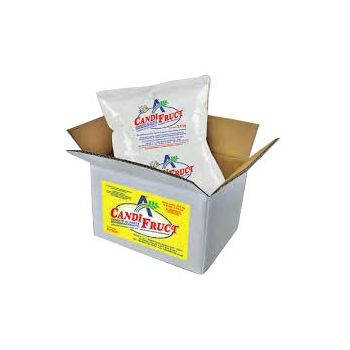
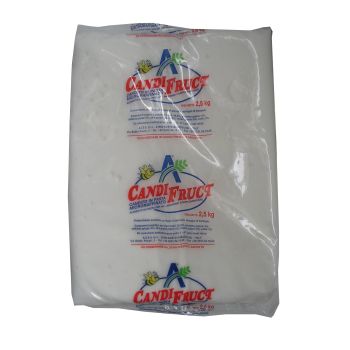
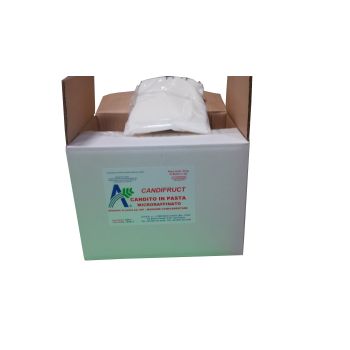
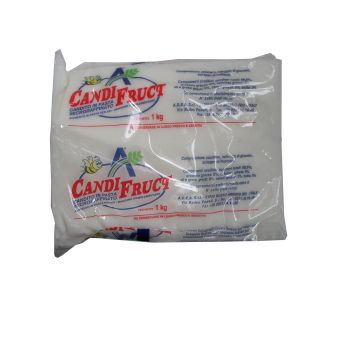
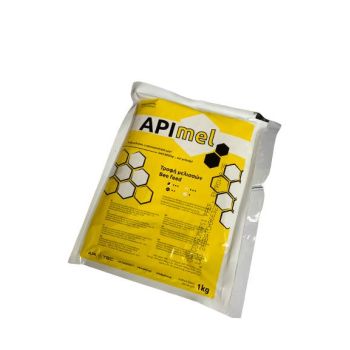
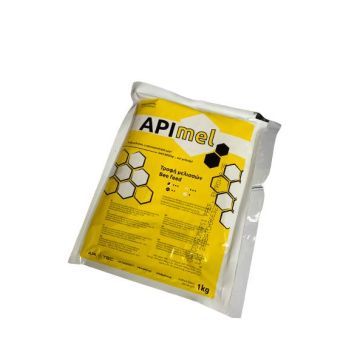
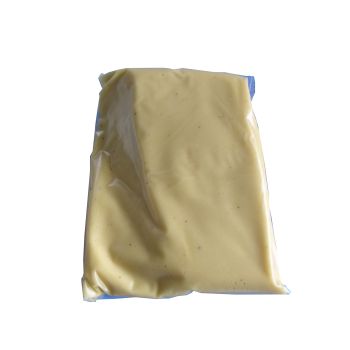
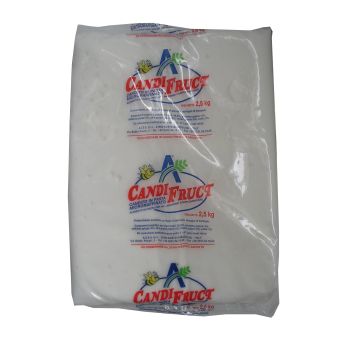
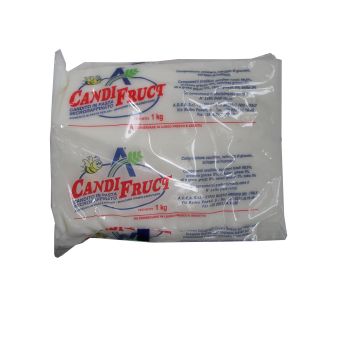
CANDIFRUCT is a paste consisting of sugar (sucrose) with balanced addition of glucose-fructose syrup that is obtained by a gentle steaming process. Due to its very fine crystals and the presence of fructose, it is very palatable and easily assimilated by bees. The presence of fructose gives softness, mellowness and texture to the product, avoiding hardening problems. CANDIFRUCT is the ideal food for the winter maintenance of families, especially in the absence of stocks. It is a very practical product as it can be fed to bees without the need for specific feeders.
CANDIFRUCT is a paste consisting of sugar (sucrose) with balanced addition of glucose-fructose syrup that is obtained by a gentle steaming process. Due to its very fine crystals and the presence of fructose, it is very palatable and easily assimilated by bees. The presence of fructose gives softness, mellowness and texture to the product, avoiding hardening problems. CANDIFRUCT is the ideal food for the winter maintenance of families, especially in the absence of stocks. It is a very practical product as it can be fed to bees without the need for specific feeders.
Candied paste - Complementary feed for bees Sugar composition : Fructose 42% Dextrose 51.5% Maltose 2.5% Triose 2% Sucrose 2%
Candied paste - Complementary feed for bees Sugar composition : Fructose 42% Dextrose 51.5% Maltose 2.5% Triose 2% Sucrose 2%
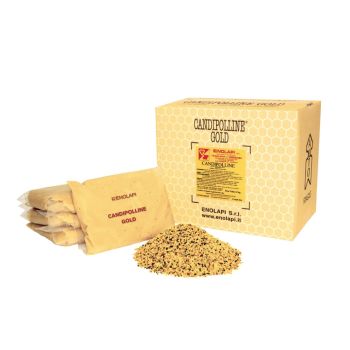
Composition: beet sugar Sucrose, sugar syrup, pollen, caseinate, albumin, glycerol Additives: Vitamins: E300 L-Ascorbic Acid (Vit C) 400 IU/kg Analytical characteristics: sugar 93%, crude protein 1.38%, crude cellulose <1.5%, crude oils and fats <0.25%, crude ash <0.5%, calcium 45 mg/kg, phosphorus 108 mg/kg, sodium 57 mg/kg, methionine
CANDIFRUCT is a paste consisting of sugar (sucrose) with balanced addition of glucose-fructose syrup that is obtained by a gentle steaming process. Due to its very fine crystals and the presence of fructose, it is very palatable and easily assimilated by bees. The presence of fructose gives softness, pastiness and texture to the product, avoiding hardening problems. CANDIFRUCT is the ideal food for the winter maintenance of families, especially in the absence of stocks. It is a very practical product as it can be fed to bees without the need for specific feeders.
CANDIFRUCT is a paste consisting of sugar (sucrose) with balanced addition of glucose-fructose syrup that is obtained by a gentle steaming process. Due to its very fine crystals and the presence of fructose, it is very palatable and easily assimilated by bees. The presence of fructose gives softness, mellowness and texture to the product, avoiding hardening problems. CANDIFRUCT is the ideal food for the winter maintenance of families, especially in the absence of stocks. e. It is a very practical product as it can be fed to bees without the need for specific feeders.
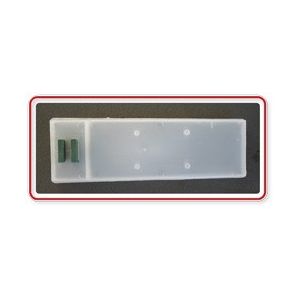
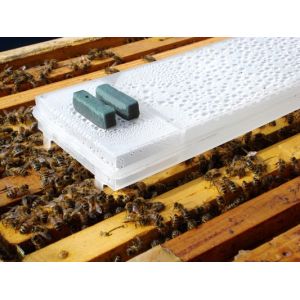
Method of carrying out the treatment 1) Clean the central frames of wax and propolis residues, where the evaporator will be placed.2) Put the Beehive "on bubble". 3) The "BioLetalVarroa formic" evaporator dispenses a minimum amount of formic acid (continuous release), sufficient to gradually break down nascent varroa, and not; therefore, it is recommended to make a treatment with sublimated oxalic acid (BioLetalVarroa sublimator recommended), to break down the maximum amount of varroa out of brood and continue, 3-4 days later, with the treatment by "BioLetalVarroa formic".4) Fill the dispenser with the amount needed for a single 25-day treatment, which is about 360 g of 85% formic acid, through the two holes provided to house the sponges, positioning it vertically and then closing it by means of the two caps provided by package until it is placed in the Beehive.5) If checking for Varroa drop, it is recommended not to clean the Varroa tray with a brush, but to operate it with a dustpan or possibly wear a protective mask, to avoid inhaling any residual oxalic acid.6) Place the dispenser on top of the frames in the center of the family, removing the end caps and inserting the two sponges into the holes provided, lodging them vertically until they touch the bottom.7) Close the Beehive with the upside-down cover if fitted with a 55mm frame. Otherwise, add a frame of the same size and close the Beehive normally8) To operate in excellent condition, it is necessary to protect the Beehive with insulation (polystyrene s20-25mm recommended) to prevent sun-induced overheating, thus allowing the evaporator to operate exclusively with the natural temperature of the bee family. 9) For the treatment of the cores, the execution of the treatment is equivalent to that of the Beehives. However, it is recommended to close one of the two holes with the cap, thus inserting only an evaporation sponge in the second hole.10) If climatic conditions induce excessive overheating, which cannot be reduced with the insulator, it is recommended to shorten the height of the sponges, checking that the daily evaporation does not exceed 14-18 g.11) When the treatment is finished, the container can be emptied of the residual acid, which can be reused for other treatments.
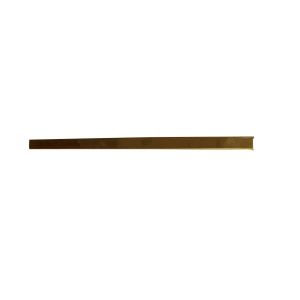
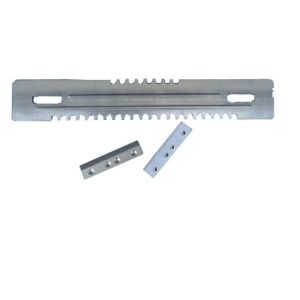
Side reinforcement guide for polystyrene Beehive D.B. 6 frames, two per Beehive - dimensions: L=47.5cm inner space=2.2cm
The Honey Crystallization ProcessAny honey can occur in the crystallized form with the exception of Acacia honey, Chestnut honey and honeydew honeys, which generally tend not to crystallize.Honey crystallization is a natural process that can occur over time. When honey contains more glucose than fructose, it is more likely to crystallize. Crystallization begins when glucose molecules aggregate to form crystals. These crystals spread through the honey, giving the solution a thicker, grainier consistency.The speed and extent of crystallization depend on various factors, including temperature and honey composition.Crystallization can take days to weeks to fully develop.